
bull leaper podcast
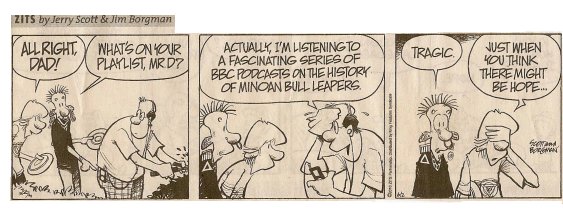
Closing the gap with humor.
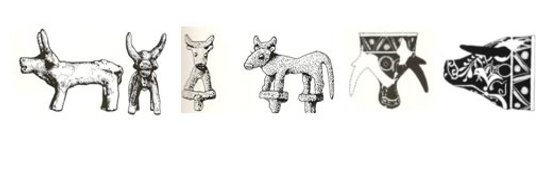
Adding humor to the interpretation while making the Kommos archaeological site an archaeological park, culturally relevant and educationally memorable to a wide ranging audience, should be considered as we progress with the interpretation of the site. Humor would be an enhancement, as the subject matter is fascinating, the context is amazing and the interpretation will need to be accessible!
Why the Bull?
The bull played a prominent role in Minoan culture as bull images appear frequently on frescoes, metal castings, pottery and depictions of shrines and on architecture. Some artifact castings from the Kommos excavation indicating bulls are displayed here. The images of artifacts below are some of the better known depictions of Minoan bull leaping as referenced in the Zits comic strip.
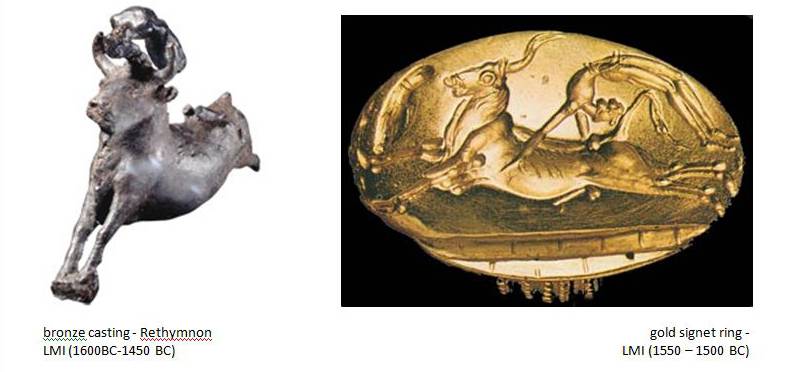
“Taking the bull by the horns” – BBC Bull Leaper podcast: What the Zits adolescents missed
Additional related info – other BBC media on Minoan bull leaping that Mr. D would appreciate
The “All right Dad” gets with it – techno adoption.
Using social media such as Facebook, Twitter and podcasts will probably become part of the Kommos Archaeological Park interpretive plan. While a bull leaper fresco or bronze has not been discovered at Kommos, the Shaws have excavated cast bronze and ceramic bulls . Why were they there and what purpose did they serve, are questions that will probably be included in our plan for interpretation.
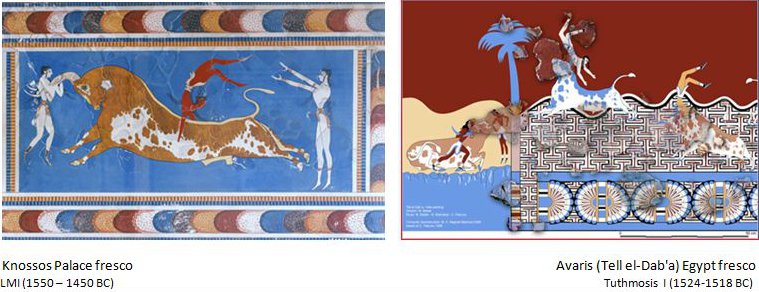
Kommos Conservancy Vice President Maria Shaw has published and lectured on the bull leaping, see her paper “Bull Leaping Frescoes at Knossos and their Influence on the Tell el-Dab a Murals” located on University of Toronto’s “T-space” website.
Another Maria Shaw paper on the subject is entitled: “Aegean Sponsors And Artists: Reflections Of Their Roles In The Patterns Of Distribution Of Themes And Representational Conventions in The Murals” Professor Shaw theorizes that Aegean itinerant artist produced the LM IB/II (1900-1700 BC) Egyptian fresco by comparing and contrasting Minoan, Aegean and mainland Mycenaean frescoes similarities and distinctions and this supplemented by a Table of the Distribution of Themes. Exclusiveness of use of the bull grappling and leaping in religious and palace contexts are related to the murals’ theocratic symbol of power theme. The official artistic expression of the bull fresco murals in palaces is made distinct from portable depictions of objects ….like the cast metal and ceramic bulls excavated at Kommos.

Friday, September 17, 2010
Lecture about the latest research at Tell el-Dab’a
Supreme Council of Antiquities, 3 el-Adel Abu Bakr Street, Zamalek, Cairo
http://archaeologyplanet.blogspot.com/2010/09/lecture-on-latest-research-at-tell-el.html
Humor and archaeology reporting – past the three panel comic,
check out this article by clicking on the address below or pasting this address into your browser
http://www.theonion.com/articles/archaeologists-unearth-lousiest-civilization-ever,18049/
It was brought to our attention that:
http://appcrit.blogspot.com/2006/06/phaistos-shocker.html
referenced our respectable site in association with the Phaistos Disk
“Side 2, text: Lotus Line Personals: ‘Potniai seeking boys: Lotus-lover seeks athletic, unconventional boy; kernos major in college seeks leather- and yoking-partner in business-minded boy, send your horn or carrier-pigeon; Do you like long walks on the hot, Mesara plain? Tired of jumping bulls? If so, and you are a stylish boy, meet me in the Kamares cave for a good time. [new passage] Do the Mycenaeans get you down? Come east for peace. Caves of Diktē is a closed, resort community now accepting reservations’.
These texts are the missing link that scholars have been seeking. Phaistos was clearly the economic center of the region, with ample storage and accommodation and catering services. Agia Triada now seems to be the detached high-roller suites. Kommos, the seaport for the Mesara, has puzzled with its foreign artifacts. It now clearly seems to be the ‘party spot’ of the island, the probable destination for Cypriot, Egyptian, Ugaritic and even counter-cultural Mycenaean revelers.”
Who was it that said all publicity is good publicity? – clearly not an archaeologist.
Bull leaping is still a sport in Spain. See it here:https://i.chzbgr.com/maxW500/7460539392/h130C6D8E/
This link was provided by Dr. Thomas F. Strasser
Associate Professor Department of Art and Art History
Providence College
http://i.imgur.com/X5inxzX.gif
Anne Chapin says: It’s a video of American bull fighters, aka rodeo clowns. The video looks like it shows “freestyle” bull fighting, in which the clown/bull fighter goes one on one with a bull. It’s amazing stuff! Very dangerous. I’ve been showing videos of American bull fighters to my classes for years now. You can check out their group on Facebook.
Whereas Froukje Klomp responds: Dear Thom, indeed, this video makes clear that the bull, as an animal, symbolizes the eternal youth of the cyclic year, and that individual man will die, sooner or later, from the very wear and tear of its timeless oncoming force and prowess… regards, and thank you, Froukje
upon which Jack Dempsey says: Interesting ideas from Ms. Klomp—As in Egypt the horned mountain sign (or djew), when it featured a disc between the horns (as akhet), symbolized the cyclic journey of the sun from darkness to light and back again, and the soul’s journey as a coming from and rejoining with the ancestors. So perhaps one level of Minoan bull-leaping was as a dangerous and sometimes fatal symbolic act (“sympathetic magic,” acting out a desired result?) by which leapers flying through the bull’s horns identified themselves with the sun’s passage—facing or facing down death and so reassuring oneself of the equally inevitable cyclic return?
A BBC production snippet with bull leaping acrobatics
http://www.antenna.gr/news/Society/article/353774/entyposiaki-anaparastasi-tis-zois-sti-minoiki-kriti